
Joint pain, especially knee pain, is one of the most common health problems today. It can affect people of all ages, although it is more common in older adults. Long working hours, obesity, lack of exercise, injuries, and aging are some of the main reasons behind joint pain.
Many people depend on painkillers for quick relief, but these medicines do not always solve the root cause. Ayurveda offers a natural and holistic way to manage joint pain by improving overall body balance. This ancient Indian system of medicine focuses on reducing inflammation, improving joint health, and strengthening the body naturally.
In this article, we will explain the causes, symptoms, and Ayurvedic treatment for joint pain and knee pain in simple words.
What is Joint Pain?
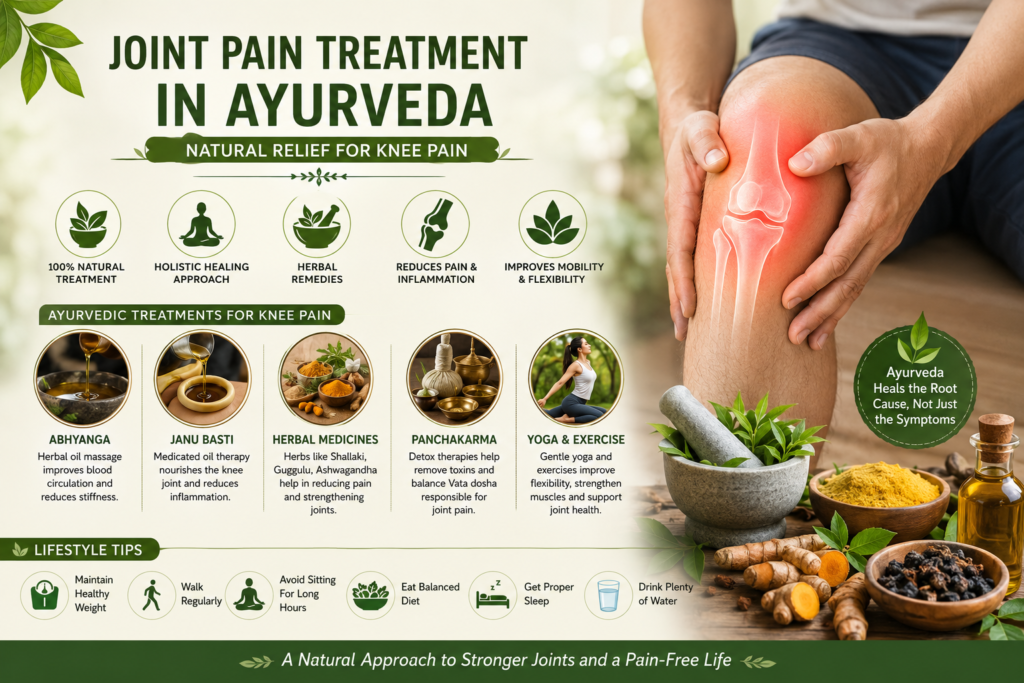
Joint pain is discomfort, stiffness, or swelling in one or more joints of the body. Joints connect two bones and help us move freely. When a joint becomes damaged or inflamed, everyday activities like walking, climbing stairs, or sitting for a long time can become painful.
The knee joint is one of the most affected joints because it carries most of the body’s weight.
Common Causes of Knee Pain
There are several reasons why knee pain develops:
- Osteoarthritis (wear and tear of joints)
- Rheumatoid arthritis
- Sports injuries
- Ligament or meniscus tears
- Obesity
- Vitamin D or calcium deficiency
- Poor posture
- Overuse of joints
- Aging
Finding the exact cause is important before starting any treatment.
Symptoms of Joint Pain
The symptoms may vary from person to person, but common signs include:
- Pain while walking or climbing stairs
- Swelling around the joint
- Stiffness after waking up
- Difficulty bending the knee
- Cracking or clicking sounds
- Redness and warmth around the joint
- Reduced flexibility
If these symptoms continue for several weeks, it is important to consult a qualified Ayurvedic doctor.
Joint Pain According to Ayurveda
According to Ayurveda, joint pain is mainly caused by an imbalance of Vata Dosha. When Vata increases in the body, it causes dryness, stiffness, pain, and reduced lubrication in the joints.
Poor digestion, unhealthy food habits, stress, aging, and an inactive lifestyle can increase Vata and lead to joint disorders.
Ayurvedic treatment aims to:
- Balance Vata Dosha
- Reduce inflammation
- Improve digestion
- Nourish bones and joints
- Increase mobility naturally
Instead of only treating symptoms, Ayurveda works on the root cause of the problem.
Ayurvedic Treatments for Knee Pain
1. Herbal Medicines
Ayurvedic doctors may recommend herbal formulations depending on the patient’s condition.
Some commonly used herbs include:
- Ashwagandha
- Shallaki (Boswellia)
- Guggulu
- Nirgundi
- Rasna
- Ginger
- Turmeric
These herbs are known for their anti-inflammatory and pain-relieving properties. However, they should only be taken under the guidance of a qualified Ayurvedic physician.
2. Abhyanga (Ayurvedic Oil Massage)
Abhyanga is a therapeutic massage using warm herbal oils.
Benefits include:
- Reduces joint stiffness
- Improves blood circulation
- Lubricates joints
- Relaxes muscles
- Helps reduce pain naturally
Regular oil massage is often recommended for chronic knee pain.
3. Janu Basti
Janu Basti is a specialized Ayurvedic therapy for knee pain. In this treatment, warm medicated oil is retained over the knee joint for a specific period.
Benefits include:
- Reduces inflammation
- Improves joint flexibility
- Nourishes cartilage
- Provides deep pain relief
- Helps in osteoarthritis management
4. Panchakarma Therapy
Panchakarma is Ayurveda’s detoxification treatment.
Depending on the patient’s condition, therapies like:
- Basti (medicated enema)
- Virechana
- Patra Pinda Sweda
- Kati Basti
- Pizhichil
may be recommended to remove toxins (Ama) from the body and restore balance.
Best Ayurvedic Home Remedies for Joint Pain
Some simple home remedies may help reduce mild joint discomfort.
Turmeric Milk
Drink a glass of warm milk with half a teaspoon of turmeric before bedtime.
Turmeric contains curcumin, which has natural anti-inflammatory properties.
Ginger Tea
Fresh ginger tea may help reduce inflammation and improve circulation.
Sesame Oil Massage
Gently massage warm sesame oil on painful joints for 10–15 minutes.
Fenugreek Seeds
Soak one teaspoon of fenugreek seeds overnight and eat them in the morning.
These remedies may support joint health but are not a replacement for medical treatment.
Foods to Eat for Healthy Joints
A balanced diet plays an important role in joint health.
Include:
- Fresh fruits
- Green leafy vegetables
- Milk and dairy products
- Almonds
- Walnuts
- Sesame seeds
- Whole grains
- Lentils
- Ghee in moderation
Drink enough water to keep the body hydrated.
Foods to Avoid
Avoid foods that may increase inflammation, such as:
- Fried foods
- Packaged snacks
- Soft drinks
- Excess sugar
- Refined flour products
- Processed meat
- Excessive alcohol
- Smoking
Healthy eating supports faster recovery.
Yoga for Knee Pain Relief
Gentle yoga can improve flexibility and strengthen muscles around the knee.
Some useful yoga poses include:
- Tadasana (Mountain Pose)
- Vrikshasana (Tree Pose)
- Setu Bandhasana (Bridge Pose)
- Bhujangasana (Cobra Pose)
- Trikonasana (Triangle Pose)
Always practice yoga under expert guidance if you have severe pain.
Lifestyle Tips to Reduce Joint Pain
Small daily habits can make a big difference.
- Maintain a healthy weight.
- Walk regularly.
- Stretch every morning.
- Avoid sitting continuously for long hours.
- Sleep for 7–8 hours daily.
- Wear supportive footwear.
- Avoid lifting heavy weights.
- Stay physically active.
Consistency is the key to long-term joint health.
When Should You Visit an Ayurvedic Doctor?
Seek medical advice if you experience:
- Severe knee pain
- Sudden swelling
- Difficulty walking
- Joint deformity
- Fever with joint pain
- Pain lasting more than two weeks
Early treatment can prevent complications and improve recovery.
Can Ayurveda Cure Knee Pain?
Ayurveda does not promise an instant cure for every case of joint pain. However, many people experience significant improvement through a combination of herbal medicines, Panchakarma therapies, healthy diet, yoga, and lifestyle changes.
The effectiveness of treatment depends on the cause, severity, age, and overall health of the patient. Following the treatment plan consistently often gives better long-term results.
Frequently Asked Questions (FAQs)
Is Ayurveda safe for joint pain?
When prescribed by a qualified Ayurvedic doctor, Ayurvedic treatment is generally considered safe and focuses on improving overall health along with pain management.
Which Ayurvedic herb is best for knee pain?
Herbs like Ashwagandha, Shallaki, Guggulu, and Turmeric are commonly used, but the right choice depends on the individual’s condition.
Can yoga help with knee pain?
Yes. Gentle yoga and stretching exercises can strengthen muscles, improve flexibility, and reduce stiffness when performed correctly.
How long does Ayurvedic treatment take?
The duration varies depending on the condition. Mild cases may improve within a few weeks, while chronic conditions often require longer treatment and lifestyle changes.
Conclusion
Joint pain and knee pain can affect your daily life, but they don’t have to control it. Ayurveda offers a natural approach by focusing on the root cause instead of only relieving symptoms. With the right combination of herbal medicines, Ayurvedic therapies, balanced nutrition, regular exercise, and healthy lifestyle habits, many people can improve joint function and enjoy a more active life.
If your pain is persistent or severe, consult a qualified Ayurvedic physician for a personalized treatment plan. Early care and consistent healthy habits can help keep your joints strong and mobile for years to come.