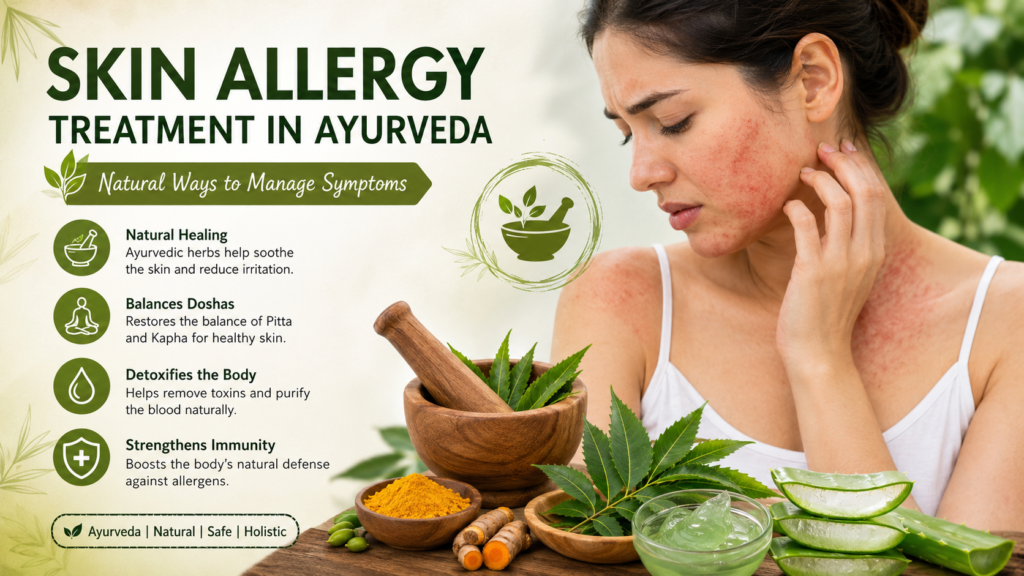
Skin allergies are becoming more common today because of pollution, unhealthy food, stress, chemicals in skincare products, and changing weather. They can cause itching, redness, swelling, rashes, dryness, or burning on the skin. While modern medicine often provides quick relief with antihistamines and creams, many people look for natural and long-term support through Ayurveda.
Ayurveda is an ancient Indian system of medicine that focuses on treating the root cause of health problems instead of only reducing symptoms. It uses herbs, diet, lifestyle changes, and natural therapies to improve overall skin health.
In this article, we will understand skin allergies, their causes, symptoms, and how Ayurveda can help manage them naturally.
What is a Skin Allergy?
A skin allergy is a reaction of the body’s immune system to something that it considers harmful. This substance is called an allergen. Allergens may include dust, pollen, certain foods, chemicals, medicines, insect bites, or cosmetics.
When the body reacts to these allergens, the skin may develop redness, itching, rashes, or swelling.
Common Symptoms of Skin Allergy
Skin allergies can appear differently from person to person. The most common symptoms include:
- Red patches on the skin
- Itching that may become severe
- Small bumps or rashes
- Dry and flaky skin
- Swelling in affected areas
- Burning or irritation
- Blisters in some cases
If symptoms are severe, spread quickly, or are accompanied by breathing difficulty, seek immediate medical care.
Common Causes of Skin Allergy
Many factors can trigger skin allergies. Some common causes include:
1. Food Allergies
Certain foods such as peanuts, seafood, milk, eggs, or soy may trigger allergic reactions in sensitive people.
2. Chemical Products
Soaps, detergents, perfumes, cosmetics, and skincare products containing harsh chemicals can irritate the skin.
3. Environmental Allergens
Dust, pollen, pet hair, mold, and pollution can cause allergic reactions.
4. Medicines
Some antibiotics, painkillers, or other medicines may lead to allergic skin reactions.
5. Insect Bites
Mosquitoes, bees, ants, or other insects may cause redness, swelling, and itching.
Skin Allergy According to Ayurveda
According to Ayurveda, skin allergies mainly occur due to an imbalance of the Pitta and Kapha doshas. Poor digestion creates toxins called Ama, which accumulate in the body and affect the blood and skin.
Ayurvedic treatment focuses on:
- Balancing the doshas
- Improving digestion
- Removing toxins
- Purifying the blood
- Supporting healthy skin naturally
This holistic approach aims to reduce recurring symptoms and improve overall health.
Ayurvedic Treatment for Skin Allergy
1. Neem
Neem is one of the most popular Ayurvedic herbs for skin health.
Benefits of Neem:
- Supports healthy skin
- Helps reduce itching
- Cleanses the skin naturally
- Has antibacterial and anti-inflammatory properties
Neem leaves or neem-based products may be used under professional guidance.
2. Turmeric (Haldi)
Turmeric is widely used in Ayurveda because of its powerful anti-inflammatory and antioxidant properties.
Benefits include:
- Helps reduce skin irritation
- Supports wound healing
- Promotes healthy skin
- Helps calm redness
Turmeric can be included in food or used as advised by an Ayurvedic practitioner.
3. Aloe Vera
Aloe vera provides a cooling effect on irritated skin.
Benefits:
- Moisturizes dry skin
- Reduces burning sensation
- Soothes itching
- Supports skin repair
Fresh aloe vera gel can be applied to the affected area after ensuring it does not worsen your symptoms.
4. Manjistha
Manjistha is an important Ayurvedic herb known for supporting healthy blood circulation and skin health.
It is traditionally used to:
- Support blood purification
- Improve skin appearance
- Help manage chronic skin problems
Always consult a qualified practitioner before using herbal supplements.
5. Panchakarma Therapy
For people with recurring skin issues, Ayurvedic doctors may recommend Panchakarma, a detoxification therapy.
Its goals include:
- Removing accumulated toxins
- Balancing doshas
- Supporting healthy digestion
- Improving overall wellness
Panchakarma should only be performed under the supervision of trained Ayurvedic professionals.
Home Remedies for Mild Skin Allergy
Some simple home remedies may provide temporary relief from mild irritation.
Apply Cold Compress
A clean cold cloth can help reduce itching and swelling.
Use Fresh Aloe Vera Gel
Pure aloe vera gel may soothe irritated skin.
Oatmeal Bath
An oatmeal bath may help calm itchy and dry skin.
Coconut Oil
Virgin coconut oil may help moisturize dry skin in some people. Avoid using it if it worsens your symptoms.
Diet Tips in Ayurveda for Healthy Skin
A healthy diet plays an important role in maintaining good skin.
Eat Fresh Foods
Choose:
- Fresh fruits
- Green vegetables
- Whole grains
- Seasonal foods
Drink Plenty of Water
Proper hydration supports healthy skin and overall body function.
Avoid Processed Foods
Reduce:
- Junk food
- Fried food
- Excess sugar
- Packaged snacks
Limit Spicy Foods
Very spicy and oily foods may aggravate Pitta in some individuals.
Lifestyle Tips to Prevent Skin Allergies
Simple daily habits can help reduce the risk of skin irritation.
- Keep your skin clean.
- Wear loose cotton clothes.
- Avoid known allergens.
- Get enough sleep.
- Exercise regularly.
- Manage stress through yoga or meditation.
- Use mild skincare products suitable for sensitive skin.
When Should You See a Doctor?
Consult a healthcare professional if:
- The rash spreads quickly.
- Itching becomes severe.
- You develop fever or signs of infection.
- Home remedies do not help.
- Skin allergy keeps coming back.
- You experience swelling of the face, lips, tongue, or have trouble breathing. This is a medical emergency.
Frequently Asked Questions (FAQs)
Can Ayurveda permanently cure skin allergies?
Ayurveda aims to improve overall health and address underlying imbalances. While it may help manage symptoms and reduce recurrence for some people, not all skin allergies can be permanently cured.
Which Ayurvedic herb is commonly used for skin allergies?
Neem, turmeric, aloe vera, and Manjistha are commonly used in Ayurveda for supporting skin health. Always consult a qualified practitioner before starting herbal treatments.
Is turmeric good for itchy skin?
Turmeric has anti-inflammatory properties that may help soothe irritated skin in some individuals.
Can stress trigger skin allergies?
Yes. Stress may worsen itching and flare-ups in some skin conditions, making stress management important.
Should I stop prescribed allergy medicines if I start Ayurveda?
No. Do not stop prescribed medicines without consulting your doctor. Ayurveda can sometimes be used alongside conventional treatment under professional guidance.
Conclusion
Skin allergies can affect daily life by causing discomfort, itching, and irritation. Ayurveda offers a holistic approach that focuses on healthy digestion, balanced doshas, herbal support, diet, and lifestyle improvements. Herbs such as neem, turmeric, aloe vera, and Manjistha have been traditionally used to support skin health.
However, every person’s condition is different. If your allergy is severe, recurring, or associated with swelling or breathing difficulty, seek medical care immediately. Combining healthy habits with professional medical advice is the safest way to manage skin allergies and maintain healthy skin.